

Why We Invested in Mobito
The answer lies in the name itself: Mobito—a bold shorthand for the Mobility of Tomorrow. But what does the future of mobility really look like?
It’s green. It’s connected. It’s efficient, safe—and above all, sustainable. A future where cities are smarter, transportation is cleaner, and every kilometer moved is a step closer to carbon neutrality.
Mobito is building the data backbone to make that future possible—not in theory, and not in decades, but right now.
So the “who” is clear. Let’s talk about the “why”.
Why? Because of the mobility problems we’re not talking about enough
Urban growth is accelerating—and so are its consequences. Today, over 70% of EU citizens live in cities, and by 2050 that figure will exceed 80%[1]. Globally, the urban population is expected to reach 6 billion by 2045[2]. As cities swell, so does the need for movement: deliveries, commutes, logistics, infrastructure. Yet transportation remains the only major sector in the EU where emissions have consistently risen since 1990. Nearly 29% of the EU’s total greenhouse gases come from how we move[3].
But urban mobility is strained in ways both visible and invisible. Some problems are felt daily—like sitting in endless traffic. Others unfold more quietly but carry deeper consequences: chronic air pollution, rising greenhouse gas emissions, and a warming planet.
Congestion and Climate Breakdown
Urban congestion is doing more than just wasting time—it’s accelerating the climate crisis. Stop-and-go traffic forces engines to idle, burning fuel less efficiently and emitting up to twice as much CO₂ as free-flow driving. The result is toxic air, rising noise levels, unsafe roads, and a growing disconnect from public spaces. The burden isn’t shared equally either. Congestion deepens environmental injustice, as lower-income communities often face the highest exposure despite contributing the least to car traffic. Tackling congestion isn’t just about efficiency—it’s about justice, resilience, and public health.[4]
Road Degradation and Non-Exhaust Emissions
Poor road conditions drive a growing but overlooked threat: non-exhaust emissions—from brake dust, tire fragments, and road surface wear—now considered as harmful as tailpipe pollution. Yet infrastructure decisions often remain reactive. In the meantime, deteriorating roads quietly increase emissions, lower fuel efficiency, and pollute soil and waterways with microplastics—not to mention the safety risks for both drivers and pedestrians[5].
Fleets in Need of Smarter Routing
Logistics and delivery fleets, vital as they are to city life, also play a disproportionate role in urban emissions. Just last-mile delivery vehicles are projected to account for up to 13% of transport emissions in cities by 2030. Many operate on outdated, inefficient routes that waste fuel and time. But smart routing and telematics change the game—a study showed that optimized delivery paths can reduce travel by 8 km per day and cut CO₂ emissions by 5.5 kg per vehicle, representing an 8% reduction for a single route. At scale, that’s hundreds of tonnes of CO₂ prevented annually[6].
The EV Infrastructure Mismatch
Electrification is coming—but the transition is uneven. Between 2017 and 2023, EU electric car sales grew three times faster than public charger installation. And while charging is widely perceived as a major barrier to EV adoption, we’re facing a growing infrastructure gap. By 2030, the EU will need eight times more charging points annually to meet demand, according to industry estimates. Yet even when chargers are added, they’re often not placed where people actually stop. Misplaced infrastructure wastes public funds, undermines the EV transition, and delays progress toward climate goals[7].
The ‘How’: Turning Data Into Climate Action
Fixing urban mobility starts with seeing it clearly. But today, we’re often flying blind—working with outdated models, rough estimates, and siloed data that fail to capture how people and vehicles actually move.
That’s the root of a deeper challenge: the urban data gap. Without real-time, vehicle-level insights, it’s hard to know where emissions peak, which routes are overused, or where infrastructure is truly needed. This disconnect leads to misplaced chargers, inefficient fleets, persistent congestion, avoidable emissions, and ultimately, missed climate targets.
Mobito closes that gap—providing GDPR-compliant, anonymized data from over 8 million connected vehicles —no hardware needed. It powers smarter planning, greener mobility choices, and the kinds of solutions cities need now—not years from now.
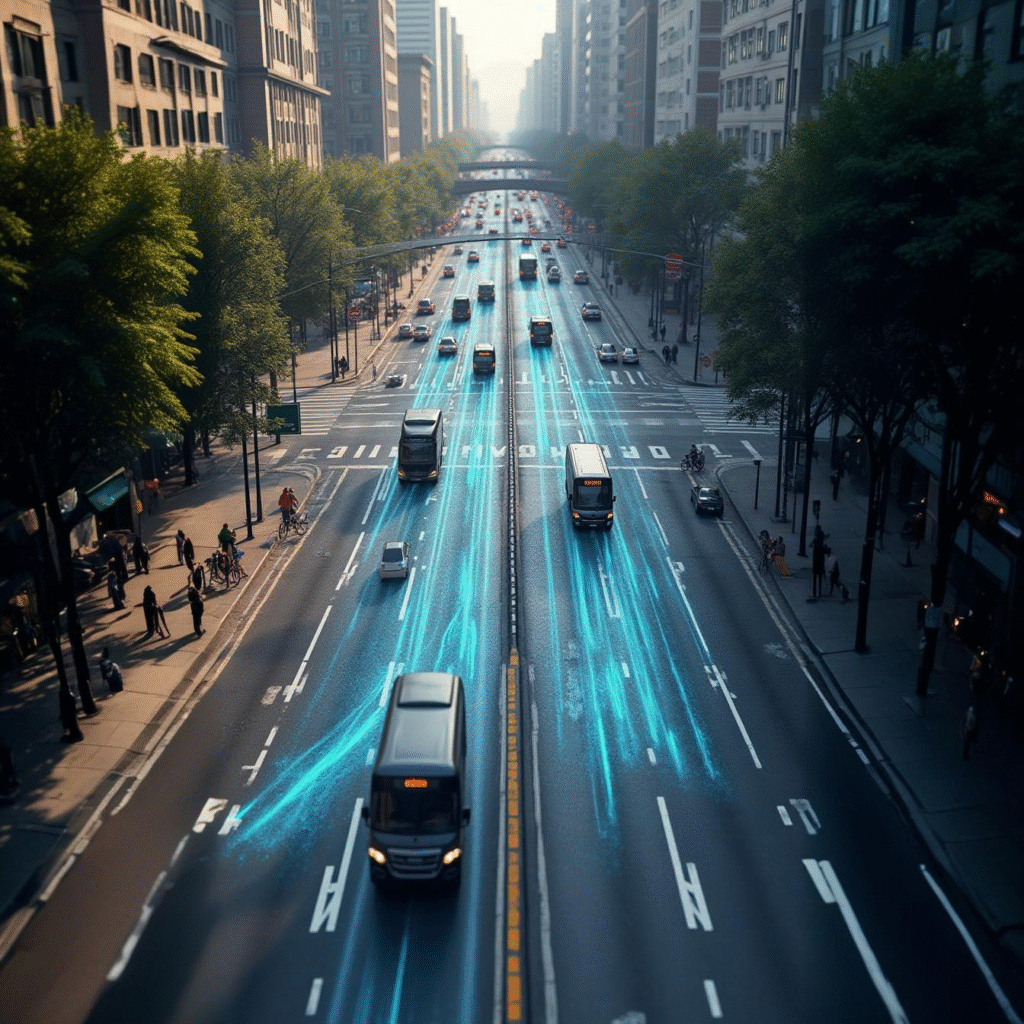
Mobito’s environmental impact begins where the problem does: movement. With high-frequency probe data—capturing vehicle positions every few seconds—it enables the detection of traffic choke points, emission hotspots, and fuel-wasting detours with far greater accuracy than legacy systems. Rather than relying on assumptions about where congestion or idling occurs, Mobito offers direct visibility into where—and for how long—vehicles stop.
When it comes to emissions, it goes beyond estimation. Using origin-destination data across different fuel types, Mobito provides end-to-end trip insights, allowing cities and mobility planners to better understand where CO₂ builds up, when it peaks, and how traffic patterns contribute to pollution. This enables more informed decisions, from low-emission zones to route redesigns that support cleaner air.
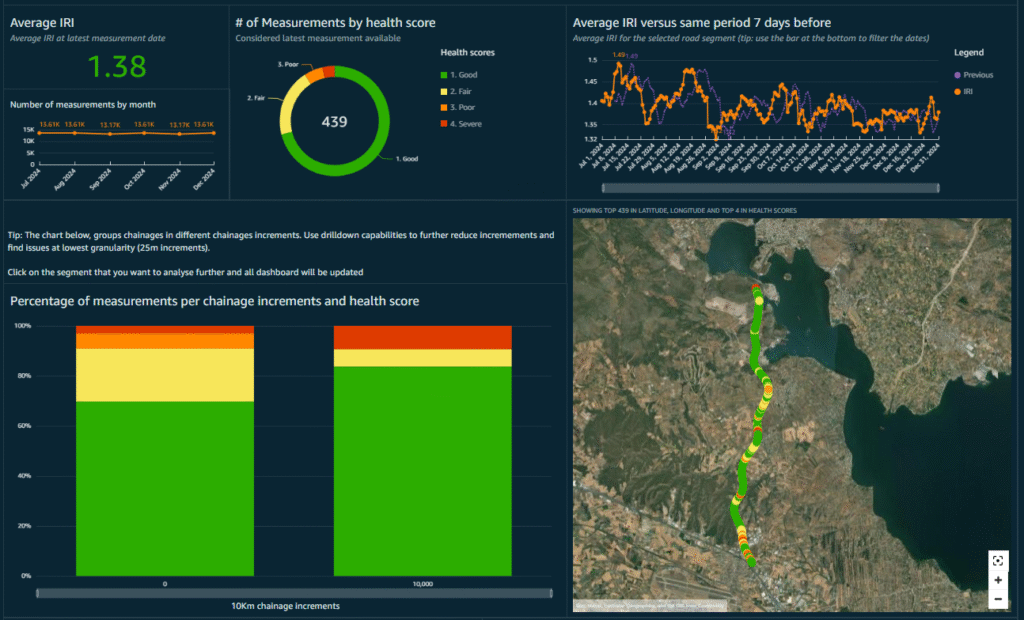
Mobito also supports infrastructure monitoring. With road health data pulled from in-vehicle sensors, cities can detect surface degradation, potholes, and rough patches early—helping to prevent safety risks and reduce fuel waste, brake wear, and microplastic pollution associated with deteriorating roads.
On the fleet side, Mobito’s route and dwell-time data help operators improve logistics—reducing idle time, streamlining deliveries, and lowering emissions. Its stop-pattern insights also assist in placing EV chargers where they’re actually needed, based on real-world usage rather than assumptions.
In a mobility system filled with uncertainty, Mobito equips cities, researchers, and operators with the timely, actionable data needed to support more sustainable and efficient urban movement.
Back to the ‘Who’: The Team Behind the Impact
Behind Mobito’s platform is a team with deep roots in automotive, mobility, and data—people who don’t just understand how cities move, but how they can move better. What impressed us wasn’t just their technical know-how, but their clarity of mission: to make transportation more sustainable, efficient, and inclusive. It’s this rare mix of expertise, integrity, and execution that made us confident—not only in the product, but in the people building it.
We believe Mobito isn’t just enabling smarter mobility—it’s helping shape a more resilient, data-driven future for urban life.
Learn more about Mobito and how they’re turning data into climate impact.

[1] Sustainable urban mobility. (n.d.). Mobility and Transport. https://transport.ec.europa.eu/transport-themes/urban-transport/sustainable-urban-mobility_en
[2] Topic | Urban, Resilience and Land | World Bank Data360. (n.d.). World Bank Data360. https://data360.worldbank.org/en/infrastructure/urban-resilience-and-land
[3] Transport and mobility. (2025, February 10). European Environment Agency’s Home Page. https://www.eea.europa.eu/en/topics/in-depth/transport-and-mobility
[4] Faculty of Public Health. (2024). Faculty of Public Health Transport Special Interest Group: Congestion Policy Brief.
[5] Oecd. (2020). Non-Exhaust Particulate Emissions from Road Transport an Ignored Environmental Policy Challenge.
[6] Karimipour, H., Tam, V. W. Y., Burnie, H., & Le, K. N. (2017). Vehicle routing optimization for improving fleet fuel efficiency: a case study in Sydney, Australia. International Journal of Environmental Science and Development, 8(11), 776–780. https://doi.org/10.18178/ijesd.2017.8.11.1056
[7] Electric cars: EU needs 8 times more charging points per year by 2030 to meet CO2 targets. (2024, April 29). ACEA – European Automobile Manufacturers’ Association. https://shorturl.at/7HmOy