

Climate Tech Is Not Dying. It Is Becoming Infrastructure.
AGORA 2.0 explored how climate technologies are evolving beyond sustainability narratives into operational systems shaping energy, resilience, AI, industrial competitiveness, and critical infrastructure.
June 3, 2026
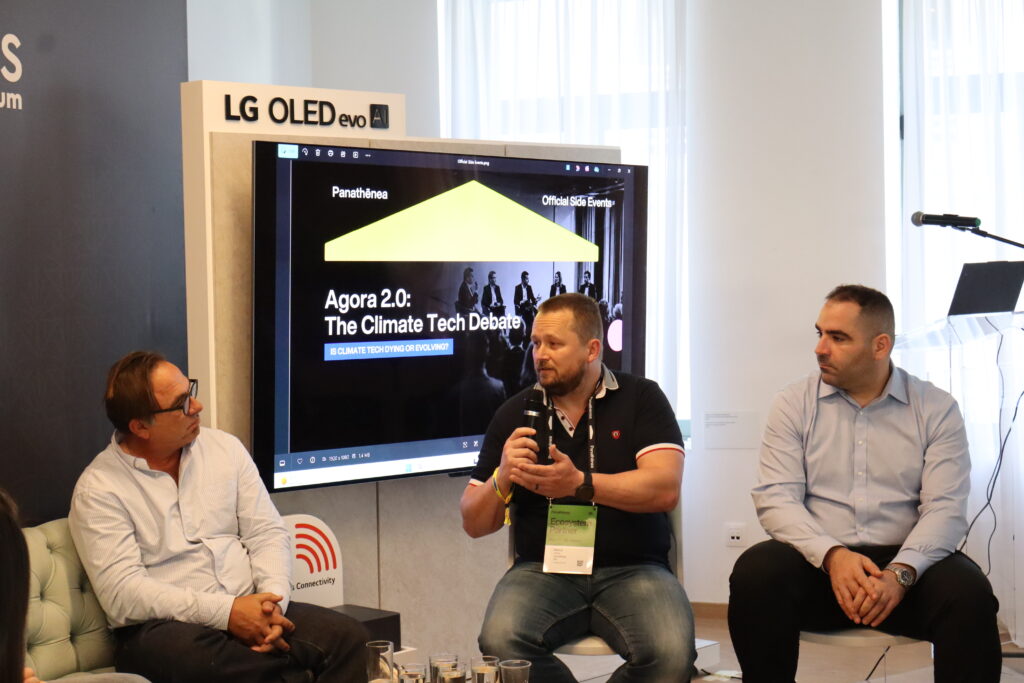
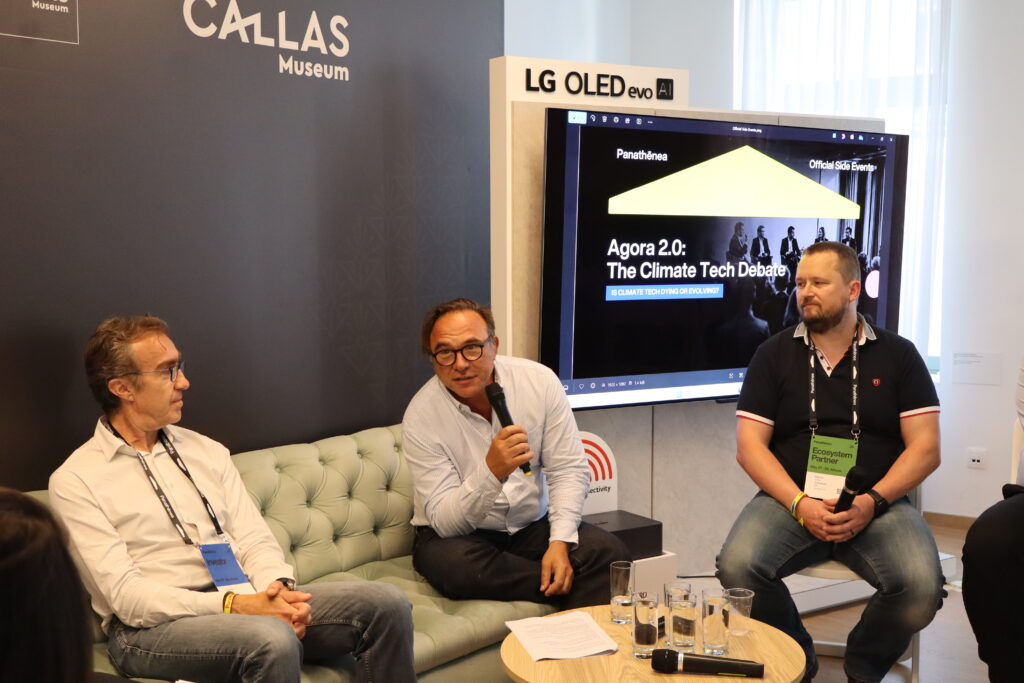
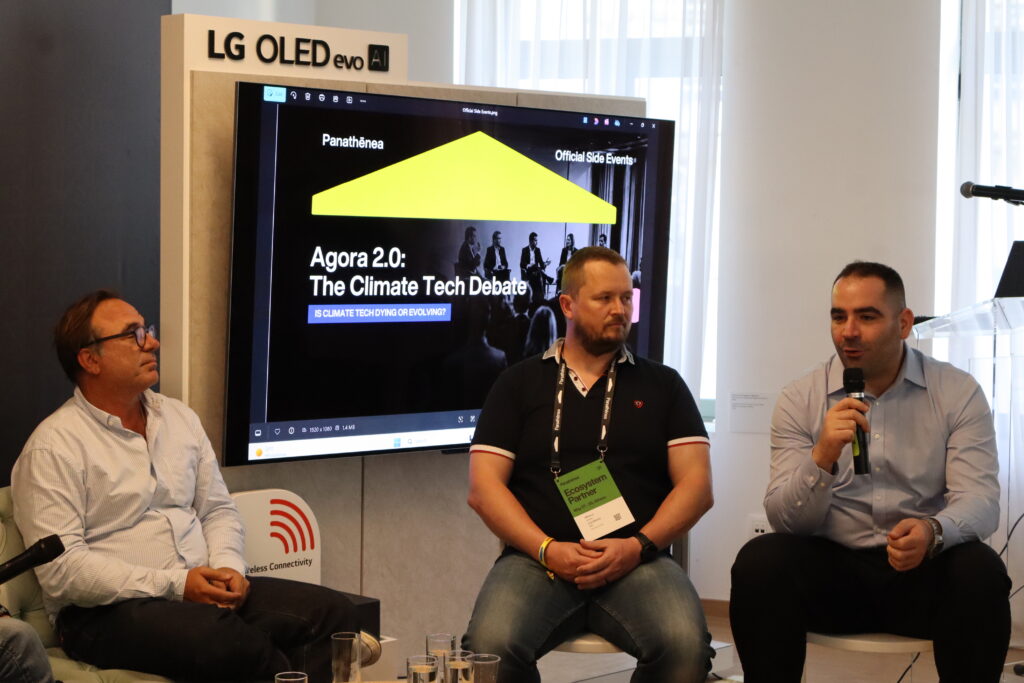
Organised by Loggerhead Ventures as an official side event of the Panathēnea Festival, AGORA 2.0: THE CLIMATE TECH DEBATE took place on 28 May 2026 at the Maria Callas Museum in Athens, bringing together investors, founders, industry leaders, policymakers, and researchers to explore one central question: Is climate tech losing momentum or evolving into critical infrastructure shaping the future of energy, resilience, and industrial competitiveness?
The event was moderated by Tina Michailidou, Journalist at SKAI and Founder of GR8 COMMUNICATION.
The panel discussion moved beyond traditional sustainability narratives and focused on the operational, industrial, and geopolitical dimensions of climate technologies. Key themes emerging throughout the panel included the idea that climate tech is maturing rather than declining, that operational value and measurable impact increasingly matter more than narrative alone, and that profitability and sustainability must coexist for climate technologies to scale successfully. The discussion also highlighted the growing interdependence between policy and technology, the accelerating role of AI in operational climate systems, and the broader shift of climate technologies toward becoming part of critical infrastructure and long-term resilience planning.
Among the key perspectives shared during the discussion:
Evangelos Kosmidis, CEO & General Partner of Loggerhead Ventures, argued that climate tech is not entering a phase of decline, but rather moving toward a more mature and operational stage. While acknowledging short-term geopolitical turbulence, he stressed that long-term value will increasingly come from companies capable of combining sustainability with measurable business performance, profitability, and operational adoption. “We are still investors. We still like numbers,” he noted, emphasizing that climate technologies must move beyond pilot-stage experimentation and become integrated into real industrial and operational environments, supported by patient capital and long-term thinking.
Petros Kokkalis, Environmental Advocate, Social Innovator, and European Leader, argued that climate technologies alone cannot solve the climate crisis without strong policy frameworks, industrial strategy, and long-term political commitment. Challenging the idea that technology itself can replace politics, he noted that climate tech is often expected to “substitute politics” through isolated innovations, while in reality governments and regulation continue to shape markets, adoption pathways, and industrial priorities. Describing climate change as “a non-negotiable counterparty,” he also stressed that climate action is becoming a matter of economic resilience, industrial competitiveness, and long-term strategic necessity rather than branding or idealism.
Markus Aicheler, Founder & CTO of SolidWatts, argued that climate tech should be treated like any other serious industrial challenge, requiring operational value, scalability, and real business fundamentals. “If you fail to address a pain point, you are doing it wrong,” he noted, emphasizing that recognition of the climate crisis has already matured globally and that the real challenge now lies in execution and deployment. He further stressed that technological progress requires collaboration between industry, investors, policymakers, and operators, while also highlighting the need for realistic expectations around the scale and complexity of climate transition technologies.
Spillios Dellis, R&D Director at Raymetrics, focused on the growing operational role of environmental intelligence and monitoring systems in industry, resilience planning, and public infrastructure. He highlighted how climate monitoring technologies are increasingly becoming embedded into civil protection systems, urban operations, and environmental management processes, stressing that organizations ultimately depend on systems that “work every day” and provide reliable operational data rather than sustainability narratives alone.
Vasilis Nikolopoulos, CTO & Co-Founder of Avokado, focused on the role of artificial intelligence in accelerating climate technologies, while stressing that governance and human oversight remain essential in critical infrastructure systems. Describing climate tech as fundamentally “deep tech,” he noted that the sector requires long commercialization cycles, patient capital, and significant investment. He also argued that AI can dramatically improve optimization, scalability, and operational efficiency, while warning that rapid technological disruption requires careful regulation and “human in the loop” approaches, particularly in energy and grid-related systems.
The event also featured a startup presentation session showcasing a range of operational climate technologies addressing resilience, optimisation, industrial efficiency, monitoring, and infrastructure intelligence across different sectors.
Ioannis Lantouris, Director of Business Operations & Managing Director Greece at OroraTech, presented the company’s space-based thermal intelligence platform combining satellite infrastructure, AI-powered wildfire detection, and environmental monitoring systems to support real-time resilience and ecosystem protection.
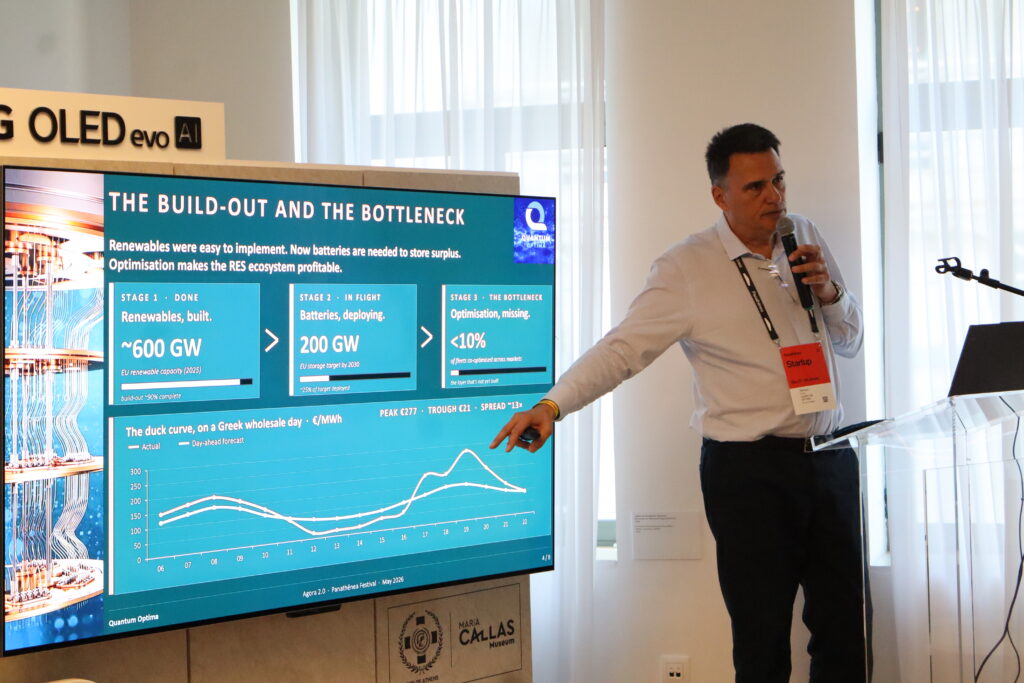
Nikos Douros, CEO & Co-Founder of Quantum Optima, presented the company’s AI and quantum-enhanced optimisation layer for European electricity markets, focusing on battery systems, aggregators, and virtual power plants, while exploring how intelligent optimisation and sovereign operational infrastructure are becoming increasingly important within modern energy systems.
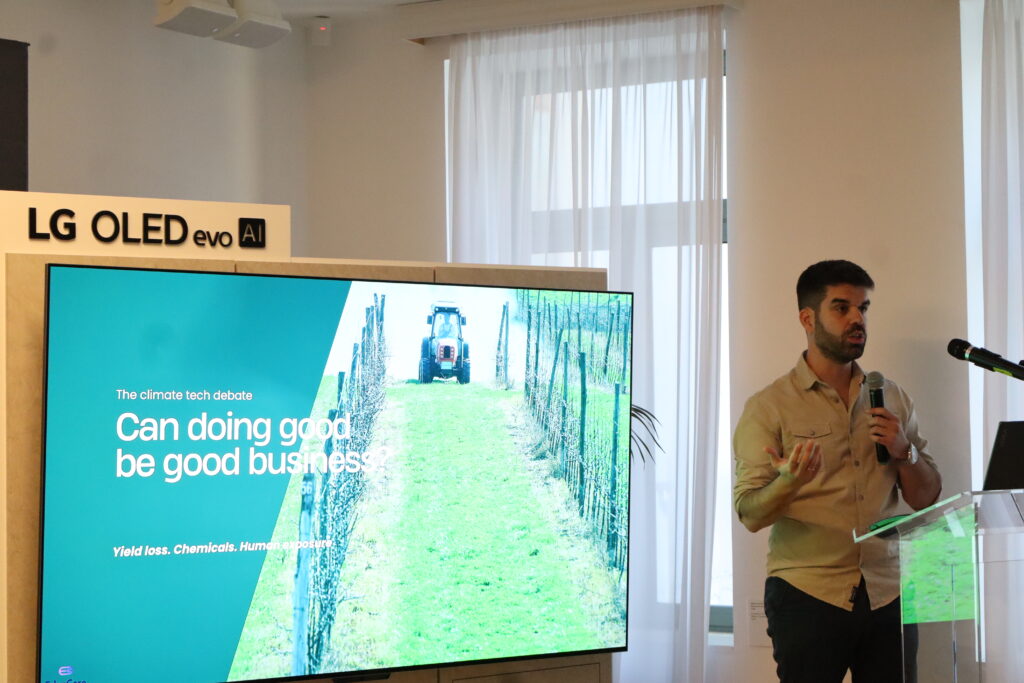
Nikos Mylonas, CEO & Co-Founder of EdenCore, showcased the company’s AI-powered agricultural monitoring and automation systems designed to reduce chemicals, labour, fuel consumption, and operational costs through precision agriculture and field intelligence technologies.
Ioakeim Sioutis, Co-Founder & CTO of H2Rema, presented the company’s approach to enabling broader adoption of green hydrogen through on-site hydrogen production and scalable AEM electrolyzer technology targeting industrial users.
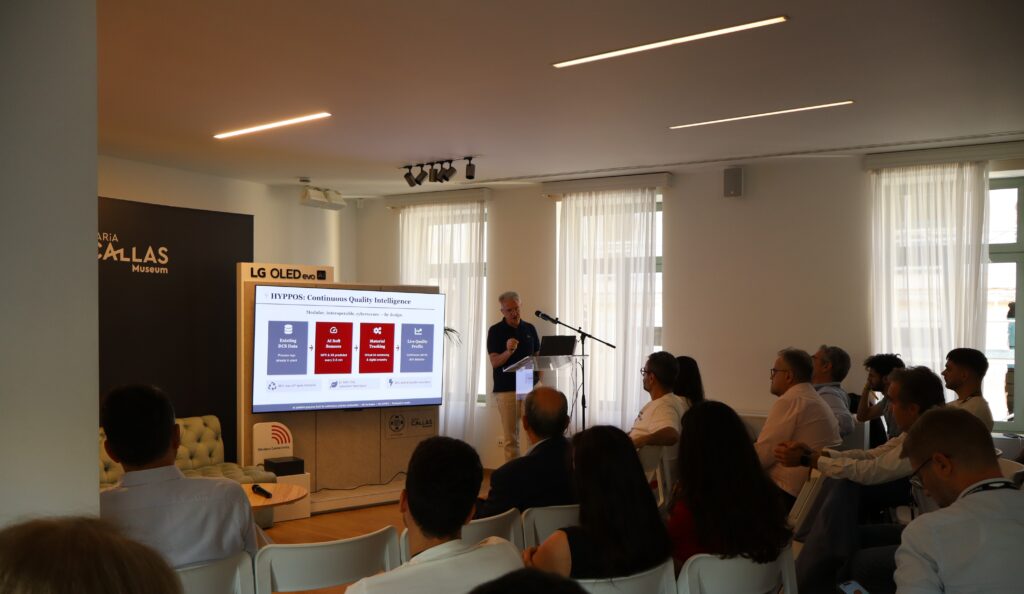
Evangelos Alepochoritis, CEO of HYPPOS, presented the company’s AI platform for continuous polymer production, focused on reducing industrial waste, improving energy efficiency, and lowering emissions through operational intelligence and process optimisation systems deployed directly on existing industrial infrastructure.
AGORA 2.0 ultimately positioned climate technologies not simply as sustainability initiatives, but as operational systems increasingly embedded into industrial infrastructure, energy management, resilience planning, and long-term economic competitiveness.